Resolving Your Construction Dispute with Comprehensive Quantum Evidence

When building defects, delays, or contractual disputes arise, the central question is always: What is the financial impact? As Expert Witness and Quantity Surveyors, we provide the definitive answer. We deliver robust, court-ready reports that quantify the cost to rectify defects, complete projects, and assess delay damages, providing the clarity needed for mediation, arbitration, and litigation.

Moises Lopez_Expert Witness

The Critical Role of a Quantity Surveyor as an Expert Witness

While other experts establish liability (who is at fault and why), a Quantity Surveyor establishes quantum (the financial value of the loss). Our reports translate complex construction issues into clear, defensible financial figures, which is the foundation for any successful claim or defence.

We provide independent, impartial, and authoritative opinions on:
  • Cost to Rectify Defects: Accurate costing for remedial works across residential, commercial, and industrial projects.
  • Cost to Complete: Assessment of the funds required to finish a project following a contractor’s default or abandonment.
  • Variation Claims & Delay Analysis: Quantifying the true value of variations and the costs associated with project delays (prolongation costs).
  • Final Account Disputes: Independent assessment of the true and final account value.

Our Expert Witness Services Across All Sectors

We possess deep expertise in the unique cost structures and standards of every sector of the Australian building industry.


Residential
From defective waterproofing in apartment complexes and structural issues in single-dwelling homes to widespread cladding and finishing faults. We quantify the cost for everything from repainting to full-scale structural remediation.


Commercial
Disputes involving office fit-outs, retail developments, and hospitality venues. We specialise in defects like failed HVAC systems, water ingress in curtain walls, defective fire-proofing, and cost-to-complete scenarios for stalled developments.


Industrial
Complex claims involving warehouses, manufacturing plants, and logistics centres. Our expertise includes assessing costs for defective concrete slabs, inadequate structural steelwork, faulty specialist installations, and significant delays impacting operational timelines.

White weatherboard home with a grey tiled roof, red brick chimney, bay window, and a flowering crepe myrtle tree behind a white picket fence

Our Direct Litigation Experience Includes:

  • Expert Testimony: Extensive experience presenting and defending our reports in court settings, including before magistrates and judges, where we excel at simplifying complex quantum arguments for the bench.
  • Supreme Court Proceedings: Instructed on high-value, technically complex cases heard in the Supreme Court of various states, providing the critical quantum analysis for precedent-setting disputes.
  • Tribunal Advocacy: A deep understanding of the processes and requirements of state-based tribunals (e.g., NCAT, VCAT, QCAT), delivering concise and impactful evidence for efficient dispute resolution.

Why Leading Law Firms Instruct Our Firm

  • Courtroom Proven: Our experts are not just report writers; we are experienced witnesses. We understand how to build an opinion that withstands cross-examination and persuades the decision-maker.
  • Routinely Retained by Top-Tier Firms: Our reputation for rigour and clarity has made us the trusted quantum partner for pre-eminent construction law practices across Australia’s major legal markets.
  • Unquestioned Independence: We provide objective, unbiased opinions that are defensible under the strict rules of expert evidence.
  • Deep Technical & Cost Expertise: We bridge the gap between construction methodology and financial quantification, delivering reports that are both technically sound and commercially astute.
  • National Coverage, Local Insight: We service clients Australia-wide, with specific knowledge of state-specific regulations, standards, and market rates in NSW, VIC, QLD, and beyond.

Why Instruct Our Firm?

  • Unquestioned Independence: We provide objective, unbiased opinions based solely on the facts and evidence.
  • Deep Technical & Cost Expertise: We are qualified Quantity Surveyors with hands-on construction experience. We understand how things are built and what they cost.
  • Court-Tested Experience: Our experts have a proven track record of providing clear, concise, and credible testimony under cross-examination.
  • Clarity in Complexity: We distil highly technical and financial data into understandable reports for legal professionals, tribunals, and juries.
  • National Coverage: We service clients across all Australian states and territories, understanding local regulations and market rates.

Our Report Deliverables

Our comprehensive expert witness reports include:
  1. Executive Summary: A clear, concise overview of our findings and quantum assessment.
  2. Scope of Instructions & Materials Reviewed: A transparent outline of the basis of our instruction.
  3. Methodology: A detailed explanation of our inspection, measurement, and costing approach.
  4. Detailed Cost Analysis: A full breakdown of rectification/complete costs, including labour, materials, plant, and preliminaries, referenced to current Australian cost databases (e.g., Rawlinsons, Cordell).
  5. Conclusions: A definitive statement on the quantum of the claim.

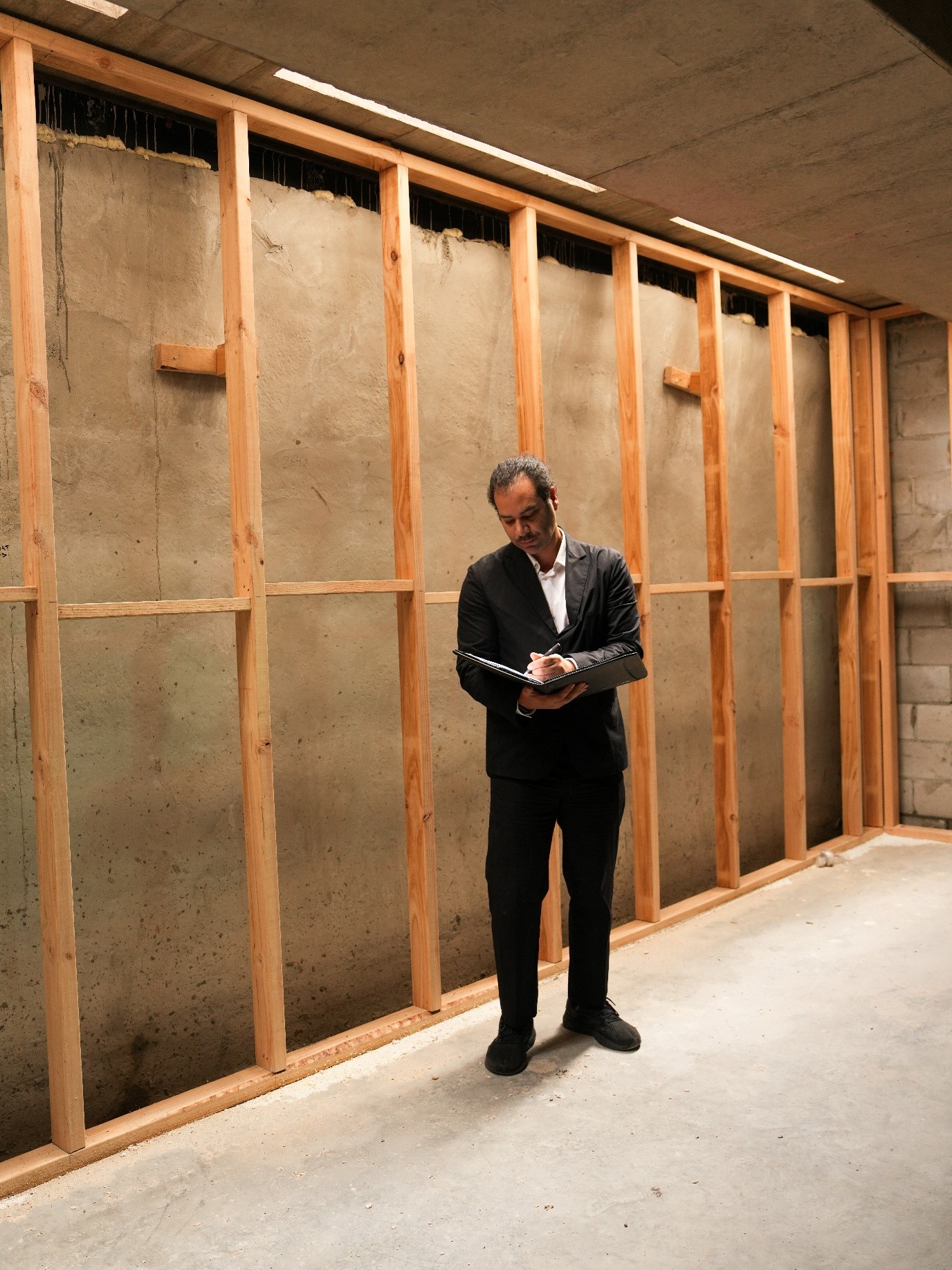
Building inspector in a black suit writing notes on a clipboard inside a property with exposed timber wall framing and concrete floor

Secure Your Case's Foundation with Defensible Quantum Evidence

Don’t let your construction dispute be undermined by a weak or poorly supported quantum claim. Instruct an expert who provides the financial certainty you need to achieve a successful outcome.

Lawyers we work with

FAQ (expert witness)

1. What qualifications do you need to be accepted as a quantum expert in Australian courts?

Australian courts want to see that we are a Certified Quantity Surveyor (CQS) with the Australian Institute of Quantity Surveyors (AIQS). We usually need at least ten years of experience and specific training in how to be an expert witness. In a recent Queensland court case (Santos v Fluor), the judge preferred a qualified quantity surveyor over an accountant because the accountant was not a construction expert. Courts will check our resume carefully to make sure our opinion comes from real QS experience, not just general knowledge.


2. How do you stay impartial when one side is paying you?

Under Australian law (the Evidence Act and court rules), our main duty is to help the court, not the person who hired us. We must be completely independent, with no financial or personal interest in who wins the case. We must tell everyone about any possible conflicts of interest upfront. If we cannot be impartial, the court can throw out our entire report or parts of it.


3. What is the difference between a 'single joint expert' and a 'party-appointed expert'?
  • A single joint expert is appointed by the court or by both sides agreeing. They write one report that both sides must use. This is common in smaller disputes or at VCAT (the Victorian tribunal).
  • A party-appointed expert is hired by just one side (the claimant or the defendant). But even then, their duty is still to the court, not to the side paying them.
    The main difference is that single joint experts have stricter rules, and their reports carry more weight. Party-appointed experts can be cross-examined by the other side’s lawyer.

4. Can you calculate loss and delay costs under Australian standard contracts like AS 4000 or GC21?

Yes, but we must follow exactly what the contract says, not what we think is fair or normal industry practice. Different contracts have different rules:

  • GC21 (used for government projects) has its own rules for variations and delay costs.
  • AS 4000 and AS 4902 use terms like “cost plus profit” or “reasonable direct loss and expense.”
    If we use the wrong contract rule, a court can rule our evidence as not allowed.

5. What do you do when site records are missing or incomplete (like site diaries or variation registers)?

Australian courts are very strict about this. A Federal Court case (Lucas Earthmovers) said that assumptions are not evidence. We cannot just accept what the builder tells us. We must:

  • Check the actual quantities ourselves, if possible
  • Show all our working out, not just a final number on a spreadsheet
  • Explain how we rebuilt missing information
  • Clearly state any assumptions we had to make
    If we do not do this, the court will reject our evidence as not reliable.

6. Have you given oral evidence in court or NCAT/QCAT/VCAT, and what is your experience?

Yes we have had various experience giving oral evidence both in person at the courts and tribunal (NCAT/QCAT/VCAT) and through video link. We take questions from both the plaintiff and defendants lawyer to help clarify how we came to the figures we are representing.

Judges and Magistrates watch closely how we perform under cross-examination (when the other side’s lawyer questions us). In the Santos v Fluor case, the judge liked the quantity surveyor because he was honest, did his best to give accurate evidence, and corrected himself when shown a mistake. We are at liberty to say:

  • How many times we have actually spoken in court (not just written reports)
  • Which courts we have appeared in (Supreme Court, Federal Court, VCAT, QCAT)
  • Whether the court accepted us as an expert or just “took” your evidence (being “accepted” is stronger)
    We also need to confirm we have read the AIQS expert witness guidelines.

7. How do you calculate the difference between what was actually paid and what 'should have happened' in a delay claim?

This is a technical question. We consider the following:

  • Use a proper method to analyse delay (for example, comparing the original plan to what actually happened)
  • Separate prolongation costs (extra site overheads because the job ran longer) from disruption costs (lost productivity while the job was running)
  • Make sure our analysis matches how the project was actually built on site
    In Santos v Fluor, the court rejected evidence from an accountant who treated four separate subcontracts as one big job. Also, do not use vague words like “significant” or “disproportionate” without showing actual calculations. The court will throw out our evidence if we cannot back it up with numbers.

Contact